The Hero of Time
Link asks you to inhabit the hero; Cloud asks you to witness. Courage and memory from Ocarina to Breath of the Wild.
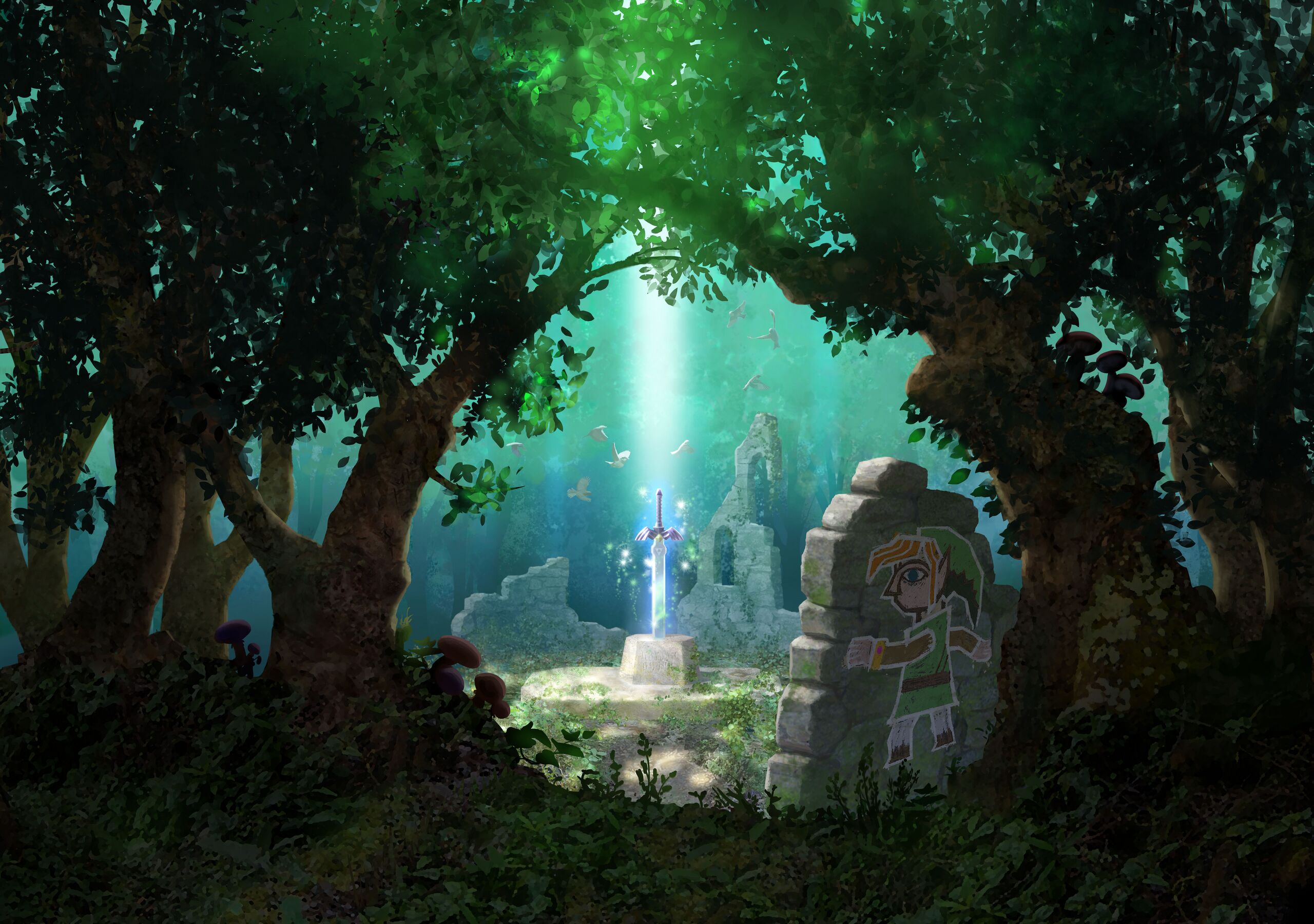
Innocent Hero
I get deeply passionate about stories, and when I think about what shaped my idea of a hero growing up, one name still sits at the top of the list: Link.
Link’s story isn’t told through sprawling dialogue, cinematic monologues, and raw trauma. For years I didn’t intellectually dissect his narrative, but I felt like I lived every second of it.
Compared to a character like Cloud from Final Fantasy VII, whose fracture I could witness vividly, I never quite felt as though I was in his boots. I was always, like the party, looking into his world.
With Link I was in the boots. I still cannot point to one line or scene and say, “That is why he stuck with me.” That absence is part of why he stuck.
Cloud was the other template: the most disoriented protagonist I had met, yet underneath the confusion was a struggle I could grasp. At its core he is a broken man who carries guilt until it crushes him and refuses to forgive himself while everyone around him already has, and still believes in him. Final Fantasy VII hits with permanence because his strength is not unshakeable solitude; it is a solitary swordsman backed by a team, a world, and a chorus of voices refusing to let him fall.
That difference shows up clearest in The Legend of Zelda: Ocarina of Time: you're just a boy cast out into an indifferent world that only you can save. The game illustrates this subtly—every realm has its own politics, petty squabbles, or helpless excuses for why they cannot intervene. None are willing, and none are capable.
Link is an innocent, clueless child living among the Kokiri; a race of eternal youth, yet he alone ages. They all have protective fairies, while he wanders alone. He wears their tunic, yet he is the only one destined to carry the weight of the outside world. It’s classic mythic storytelling, but my attachment to Link went deeper than traditional tropes, and I wouldn't fully understand why until years later with The Legend of Zelda: Skyward Sword and Breath of the Wild.
Link isn’t just a warrior conquering dungeons; he is the quiet embodiment of what courage is at its core. A legendary hero forever remembered by the name of the one he was trying to save.
Skyward Sword: Courage for Bonds
The Legend of Zelda: Skyward Sword promised an origin: how the world was forged, why Hyrule became sacred ground, and how this eternal cycle began. But buried in that origin was a revelation: what heroism meant in this universe.
Late in the game comes a pivotal truth. You discover that the struggle is bound by an ancient decree: the hero will repeatedly rise to oppose evil, while Zelda's sacred role and the forces surrounding her bind her to the same cycle across generations. But the reality behind that design hits with unexpected cruelty.
Ancient evil couldn't simply be swept away by cosmic power, it required an unyielding mortal will. The world needed a champion who would push through insurmountable suffering without breaking, and that champion needed a reason to endure it all.
That reason was Zelda.
The bond between them did not start in Skyward Sword, you feel it in every era, but Skyward Sword is where Nintendo shows you the machinery behind it.
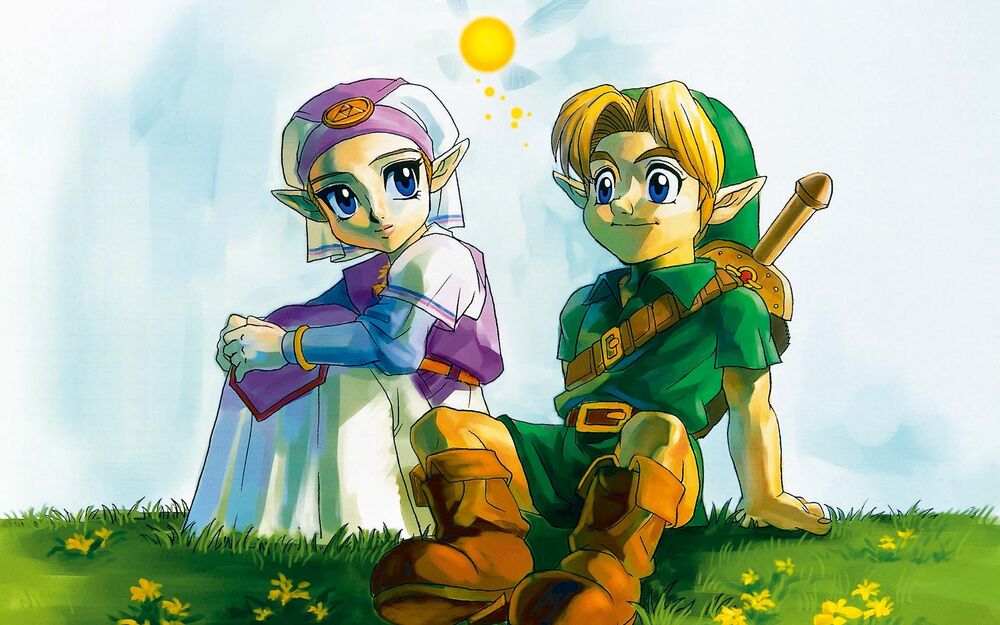
Link’s bond with her was the driving engine. Zelda was placed directly in harm's way, effectively turned into the hostage. Link possessed innate courage, but pure courage seemed aimless without love and conviction to steer it, even when steering it meant walking straight into the dragon's jaws.
At least, that was my takeaway at the time.
Sitting with the controller in hand, I felt an eerie sense of betrayal. It felt as though his courage was merely a reaction to cosmic manipulation. He only fought because destiny had engineered a bond he couldn't walk away from.
Yet as the scene played out, I was mesmerised by him all over again.
Knowing the agonising fate resting on them both, Link doesn't walk away. When Zelda seals herself inside a crystal to hold back the darkness for thousands of years, apologising through tears for leading him into this burden, Link doesn't care about the cosmic design. He throws himself against the amber barrier, pounding on it desperately, refusing to leave her behind.
Courage wasn't a mechanical tool scripted by destiny. In that moment, it was his unwavering refusal to give up on her, no matter the cost. And from that point forward, the journey stopped feeling like a chosen saviour's obligation, it became a deeply human quest to bring a friend home.
Breath of the Wild: A Silent Devotion
The Legend of Zelda: Breath of the Wild brought this entire journey home. The sequel, Tears of the Kingdom, gave Zelda even more agency and depth, but for me, Link's character was permanently cemented by what this world quietly reveals about him.
Everything I had absorbed on instinct across decades of games, every unspoken beat and half understood emotion from childhood suddenly spoke directly to my adult mind. Once again, without uttering a single word, Link proved why he holds the title of the legendary hero.
In this world, Link doesn't feel like an untouchable saviour forged by prophecy; he is a stoic, dedicated soldier assigned as the Princess’s personal royal guard. As ancient machines begin to stir across the kingdom and an ominous ruin draws near, Zelda and Link journey from spring to sacred spring trying to awaken her dormant sealing power. And at every single turn, she fails.
Zelda carries the suffocating weight of an entire kingdom counting on her, and next to her stands Link: silent, gifted, and seemingly unwavering in his purpose. At the springs, we watch her submerge herself in freezing waters, praying desperately until her body trembles with exhaustion, only to be met with total silence. As she breaks down in tears, questioning her worth and lamenting that she isn't good enough, Link simply stands vigil behind her, watching her carry an agonising, solitary burden that he has no power to save her from.
This silence is something Zelda initially despises. In the early days of their journey, while she still clings to hope, she tries to pull him into her world, studying ancient relics, examining flora, and revelling in the quiet wonder of a kingdom she had always longed to explore. But Link offers no real reaction. He remains an impenetrable stone wall.
She assumes his stoicism is judgment, that the prodigy swordsman is quietly looking down on the princess who cannot awaken her own power. In one critical memory, her frustration boils over. She lashes out in the dirt outside a shrine, demanding he leave her alone and stop trailing her every step.
Moments later, in the canyons of the desert outskirts, the consequences of that distance catch up to her. Ambushed by assassins, she is defenceless. Yet before the blades can touch her, Link drops into the dirt between her and death.
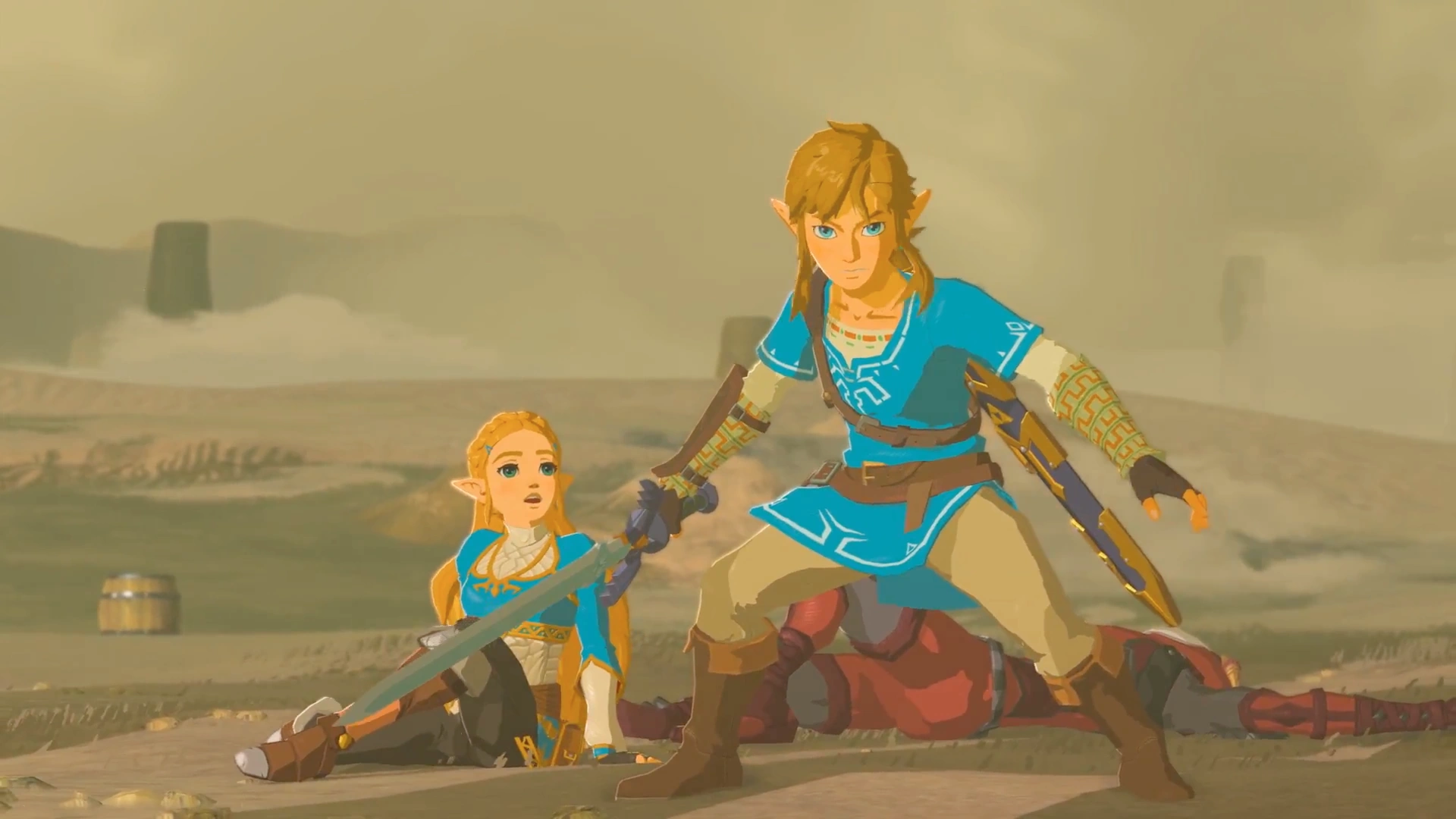
In that instant, her resentment shatters. She finally sees him clearly: not as an arrogant prodigy, but as a protector who places his life between her and demise, treating her survival as his only true duty.
That rescue breaks the barrier between them. Later, in the privacy of her study, she records the conversation that changed how she saw him forever:
"When I talked to him about it, he was unusually open with me, and he told me why he's so quiet. He said that with so much at stake, and with so many eyes upon him, he felt it necessary to stay strong and to silently bear any burden."
His silence was never arrogance, nor was it an absence of feeling. It was a shield. For thirty years of gaming, Link had been a silent protagonist because of an old medium's convention. Breath of the Wild reframed that silence into an act of devotion: he holds his tongue because he believes that if the champion wavers, everyone's hope dies with him.
Soon after, the Great Calamity arrives. The ancient titans are corrupted, the Champions are slaughtered, and the kingdom burns.
We see them fleeing in the torrential rain toward Fort Hateno—battered, exhausted, and covered in mud. A terrifying platoon of mechanical Guardians closes in. Link is bleeding out, swaying on his feet, his body broken. In Zelda's eyes, you see pure, paralysed terror.
Yet Link steps forward once more.
There is no bravado on his face, but neither is there surrender. Barely holding his footing, out of breath, he raises his chipped sword. He has nothing left to give, yet he refuses to yield.
As a Guardian charges its blinding beam directly at his chest, his body finally gives out, and he collapses into the mud. And in that exact second, faced with the reality of losing him, Zelda throws herself across his fallen body. Her hand thrusts outward, and a golden crest blazes across the battlefield, shutting down the entire mechanical army in an overwhelming pulse of light.
Her awakening was never triggered by sacred springs or whispered prayers or love, it awakened out of necessity. Link’s silent endurance had demonstrated what duty truly demanded: when an impossible burden is placed on your shoulders, you give everything you have until your last breath. With her protector fallen, the kingdom was stripped of its final shield. With such a void, Zelda had no choice but to fill it.
Popular readings often reduce this moment to romantic panic, but her actions immediately after prove otherwise. She is composed, resolute, and clear-minded. It did not seem emotional. She directs the Sheikah to save Link’s life, oversees the return of the Master Sword to the forest, and turns back toward the burning horizon.
Just like in the ancient past, she locks herself into an agonising, solitary struggle, binding the Calamity within the walls of Hyrule Castle for a hundred years to buy time while Link sleeps in the Shrine of Resurrection.
Into the Nightmare Without Memory
A century later, Link opens his eyes.
He has no memories. He doesn't know the politics, he doesn't know the kingdom, and he doesn't even remember Zelda’s name. He simply wakes to a desperate voice pleading from the horizon, calling for help.
And without a second thought, he starts walking.
Series producer Eiji Aonuma has discussed how the game was designed so that, after leaving the Great Plateau, the player can head directly to Hyrule Castle and confront the final boss. At first, that felt like a concession to speedrunners or open-world freedom. My own gaming instincts fought against it; I hesitated to even approach the castle, paranoid that I’d trigger an irreversible event or miss crucial content.
Yet when I finally let go of those gamer habits and surrendered to the narrative pull, I turned toward the centre of the map.
As you approach, the scale of the nightmare hits you. The Calamity swirls like a violent storm around the spires, and a persistent golden light that struggles to contain it. Stepping past the outer gates, the difficulty spikes brutally. The world ceases to be a gentle sandbox; the music turns awkward, Guardians lock on with deadly precision, and you realise how profoundly outmatched you are. You have to scramble, hide, and scrape for survival.
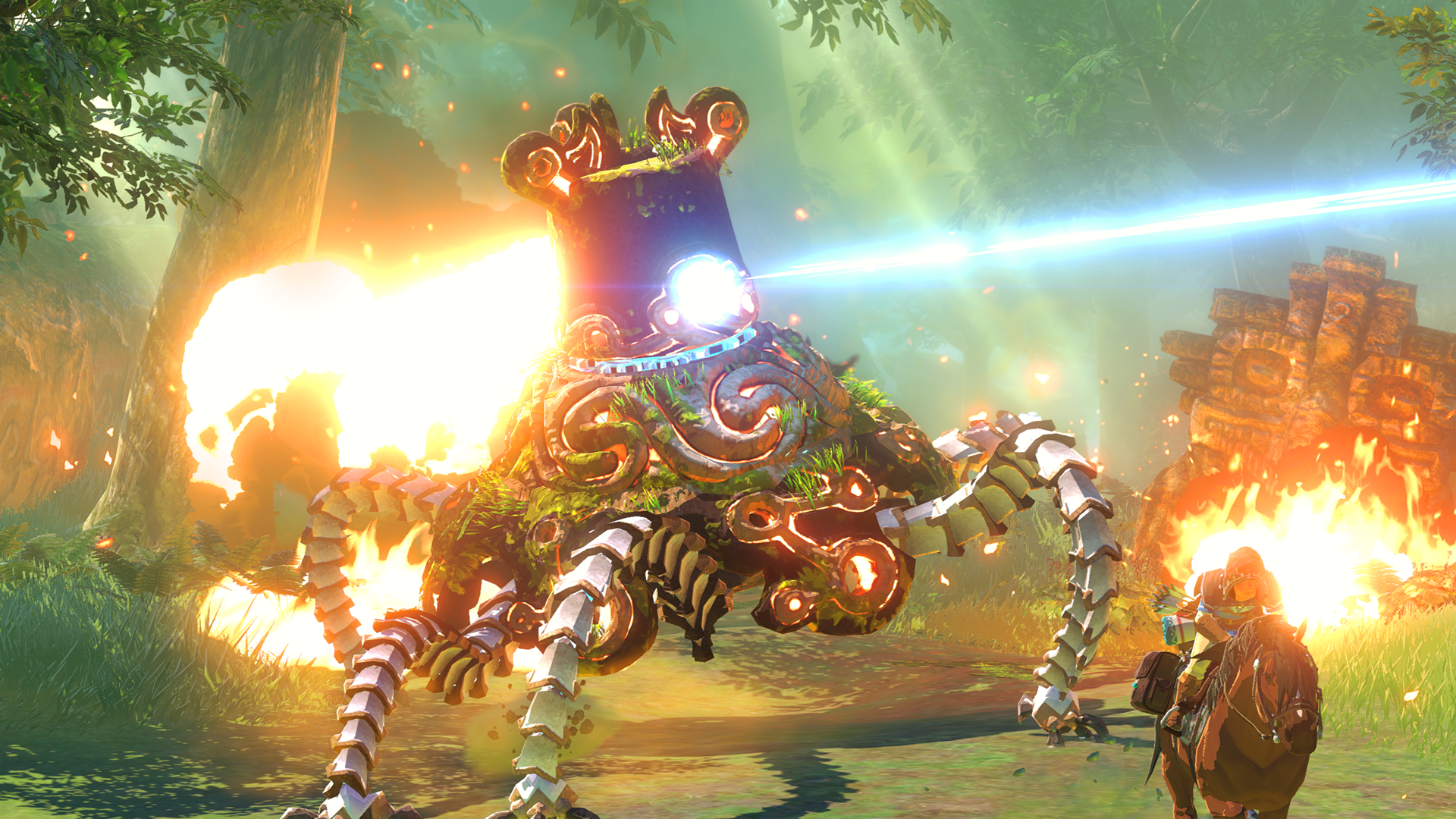
The terror of this suffocating, lethal gauntlet is the representation of the nightmare Zelda has been holding at bay by herself for a hundred years.
Let's look through the lens of a speedrunner who climbs down off the plateau, ignores every recovered memory, and charges through the gates in nothing but rags and a tree branch. He doesn't need to reconstruct his past. He doesn't need a hundred hours of character development or an existential manifesto.
He runs straight into the belly of the beast because someone is suffering, someone is waiting, and he has a sword.
It reveals something profound about why Link has endured for forty years: the silent hero template isn't an empty shell. It is the purest expression of moral instinct. Other heroes must dismantle and rebuild their entire ego to stand against their demons, but Link proves that when you strip away history, identity, and pride, true courage is what remains.
What Courage Looks Like Without Ego
When you defeat Calamity Ganon in the depths of the sanctum, the nightmare does not end, it ruptures. Bursting through the stone, the entity takes the shape of a colossal, burning behemoth across Hyrule Field: Dark Beast Ganon.
Zelda’s strength is finally broken. After an entire century of holding the beast in stasis alone, her voice reaches Link, admitting she can no longer contain its hatred.
Link mounts his horse, alone on the open plain facing the titan. In that moment, a beam of sunlight cuts through the storm clouds, and Zelda entrusts the final stand entirely to him:
"I entrust you with the Bow of Light, a powerful weapon in the face of evil.
Link... you may not yet be at a point where you have fully recovered your power or all of your memories...
But courage need not be remembered...
For it is never forgotten."
The line is choreographed with breathtaking cinematography. As the words fade, the camera cuts low behind Link, his horse shifting in place against the scale of the monster before them.
Across the history of the series, the division of duty has always remained clear: Zelda holds the sacred authority to seal the darkness, but Link is the blade that cuts through it. She has always been the more formidable force in the mythos, stepping in at the eleventh hour to pin the terror so the swordsman can deliver the final strike. Seeing that dynamic play out here, framed against the sweeping painterly horizons of a broken Hyrule, charges the entire final set piece with emotional weight.
When Dark Beast Ganon finally collapses and the sky over the castle clears for the first time in a century, Zelda steps out of the fading light. She looks fragile, weathered by an impossible isolation, and deeply relieved.
Link stands before her, a silent warrior who crossed an entire ruined continent on pure, wordless conviction.
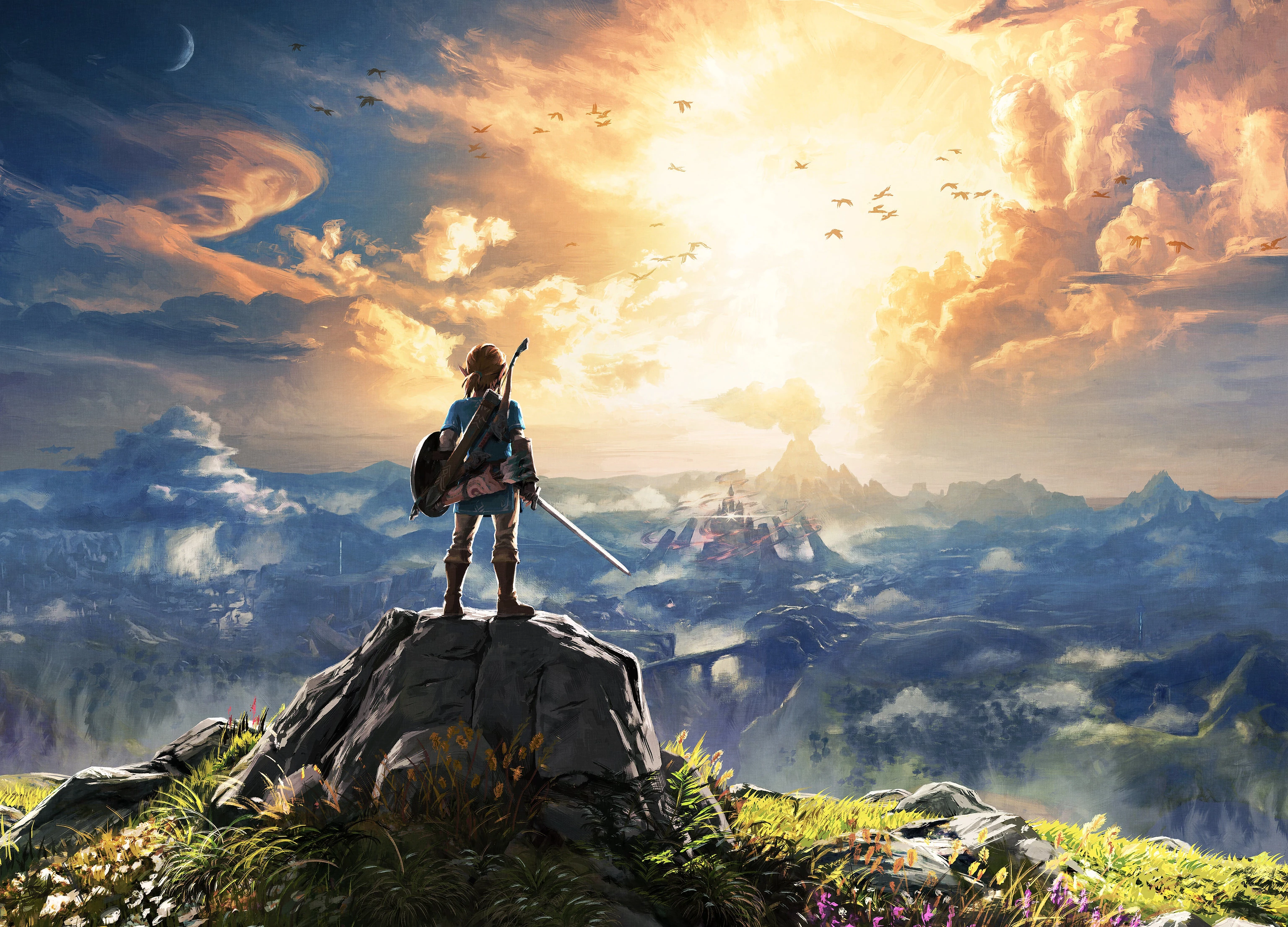
And then, looking at the boy who bled for a world he couldn't recall, she asks the only question that truly matters:
"May I ask you something? Do you really remember me?"
It is easy for modern storytelling to look at Link and dismiss him as shallow, a quiet relic from an era before games demanded sprawling dialogue trees, psychological unravelling, and overt character flaws. We live in an era where we expect heroism to look like Cloud: an identity fractured by trauma, a forensic puzzle that has to be painfully assembled piece by piece before the sword can even be swung with conviction.
Link offers none of that. He gives no speeches and wrestles with no vanity.
Yet if you look at what this world depicts, his silence reveals something far deeper than an empty player avatar.
Link is the hero without an origin. He is the foundational template not because he lacks substance, but because he embodies an archetype stripped down to its absolute, uncorrupted core: pure moral reflex.
He didn't charge through the gates of Hyrule Castle because he remembered who Zelda was. He didn't endure a century of ruin out of loyalty to a crown, pride in a title, or nostalgia for a kingdom he had long forgotten. He walked straight into the nightmare simply because someone was trapped on the other side of that door, crying out for help.
Other heroes show us how to survive our brokenness, how to heal our minds, confront our guilt, and pick up the pieces of who we used to be. But Link reminds us of what exists before the baggage ever piles up.
Courage was never something he needed to remember. It was simply what was left when everything else was stripped away: the instinctual, unconditional choice to step between the darkness and someone in need, armed with nothing more than the will to take the first step.