The Entire Industry Fled GTA 6: Nintendo Sent Zelda
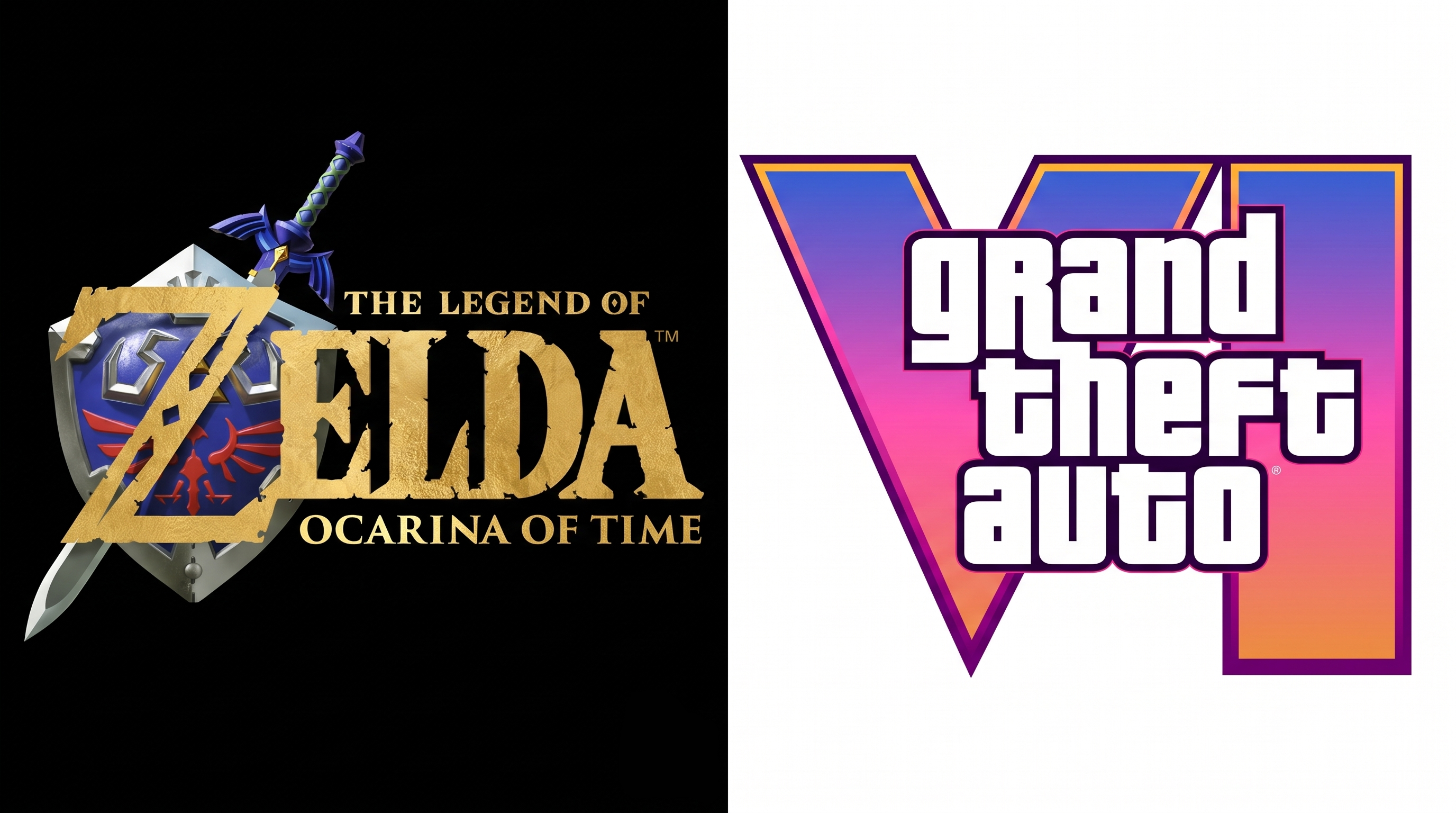
Grand Theft Auto VI lands November 19; the Ocarina of Time remake on Switch 2 follows fourteen days earlier, by design.
A Historic Collision
The entire gaming industry has spent months clearing out of the Grand Theft Auto VI release window, now firmly locked in for 19 November 2026.
It makes complete sense. When a cultural monolith of that scale touches down, competing for media attention and holiday budgets feels like an immediate losing battle.
Yet an ancient hero has stepped directly into the path of this commercial Goliath. Nintendo has locked in 5 November 2026 for The Legend of Zelda: Ocarina of Time remake, landing just fourteen days prior, right in the line of fire.
When Games Rewire You
To understand why this feels bigger than two massive intellectual properties colliding, you have to look at how games alter your expectations. My gaming youth was defined by Super Metroid, Pokémon, Resident Evil, and Final Fantasy. But Metal Gear Solid was the first title that permanently changed how I approached the medium, a dopamine shock of total immersion that fundamentally rewired what I expected from a video game.
Years later, Red Dead Redemption 2 gave me that exact same realisation about Rockstar.
When I played the original Red Dead Redemption, I enjoyed it, but it didn't consume me. By the time Red Dead Redemption 2 arrived, the sheer cultural noise was impossible to ignore. It was obviously going to sell, but what caught me off guard was seeing people I never imagined enduring a slow-paced western become completely obsessed with it.
Loading up Red Dead Redemption 2, you immediately hit cinematic after cinematic woven into deliberate slivers of gameplay. It feels slow, heavy, and sluggish. It's not a world you can just sprint through or bend to your will. Without officially being a survival game, it forces you to live inside its upkeep, making the routine friction of existence the very backdrop of its story.
That level of uncompromising realism brings the world to life with an iron grip. Even casual players, once they surrender a few uninterrupted hours to it, are pulled entirely under.
For me, I eventually put it down. My horse died, I got lost in the wilderness, and I realised I just wanted to go kill a dragon. But I still walked away knowing it had achieved that Metal Gear Solid calibre: the rare game that, once you accept its terms, stops feeling like a piece of entertainment and starts feeling like an alternate reality.
Two Different Magics
That era was also when I found The Legend of Zelda. Stepping into Hyrule as a kid left an imprint I've never shaken. Yet even as an unquestioned masterpiece, it was an entirely different beast than what Rockstar deliver.
That Rockstar and Metal Gear Solid calibre comes from building a hyper-realised world designed to swallow you whole. The Legend of Zelda's magic works in the exact opposite direction: it's an intricate, clockwork adventure where every single step feels completely intentional.
Nintendo dropped a gameplay demonstration followed by a full trailer of the Ocarina of Time remake. Their initial teaser months ago sparked excitement, but there were lingering doubts about whether modern Nintendo would make the right calls with such sacred ground. After seeing the full gameplay demonstration, I think they are about to catch lightning in a bottle twice.
Faithful Recreation, Modern Weight
The original release was lightning in a bottle because it wasn't just a technical showcase that introduced 3D targeting to the industry; the entire journey was pure, unbroken fantasy adventure. At its core, it's exploration, action, and clever environmental puzzles. You earn new gear, and that tool immediately unlocks new mechanics that recontextualise the entire world. That loop is so tightly wound that you simply vanish into the mysteries and wonder of Hyrule.
That brings us to the fundamental divide between Breath of the Wild and what Ocarina of Time, as well as classic 3D Zelda as a whole, brought to the table: a truly lived-in world.
Not like Grand Theft Auto or Red Dead Redemption, where the goal is a massive, hyper-realised simulation, but a world that is tightly defined, curated, and complete.
With The Legend of Zelda: Breath of the Wild and Tears of the Kingdom, my biggest friction point was always how empty they felt. I understand that desolation makes narrative sense within a post-apocalyptic Hyrule, but even Tears of the Kingdom failed to scratch that itch for real, labyrinthine temples and that distinct feeling of experiencing a living and cohesive world.
Ocarina of Time was the game that created that appetite in the first place. It arrived and showed an entire generation what we wanted before we even had the vocabulary to ask for it.
The footage confirms what Nintendo has promised: a faithful recreation. The narrative beats, the temple designs, and the foundational structure remain completely intact. Same temples, same dungeons.
What they have done is bring a Nintendo 64 pillar into the modern age. And the thing that stood out to me most while watching that footage was realising just how large the original game actually was. Seeing it properly rendered reminded me that Ocarina of Time was no historical fluke. It holds its spot on the podium as the greatest game of all time for a reason.
Nintendo can never recreate the historic shock of introducing 3D movement to an entire industry for the first time, but modern hardware finally allows them to give that world the rich textures, atmospheric lighting, and performance it always deserved.
Because of that, this remake will succeed on two distinct fronts: it will tap into deep nostalgia for older players while replicating that exact same breathtaking sense of wonder for a younger generation.
Back then, I didn't care from an industry perspective that the Nintendo 64 had an analogue stick while rival controllers were still flat d-pads. Stick or no stick, specs didn't matter. It was entirely about the spell the game cast over you. And a new generation is about to experience that exact same revelation.
Hero of Time Versus Pop-Culture Titan
If Nintendo pulls this off, we aren't looking at David versus Goliath at all. We're looking at two entirely different gaming cultures receiving what could be two of the greatest releases in history.
Standing a loyal remake of The Legend of Zelda: Ocarina of Time toe-to-toe with Rockstar's Grand Theft Auto VI isn't a slaughter. It's the Hero of Time versus the Pop-Culture Titan. These are two untouchable development studios operating in lanes so distinct they don't even register as competition: an all-ages, curated fantasy exclusive to Nintendo hardware versus a mature, multiplatform cultural juggernaut.
For players, November 2026 isn't about which game wins. It's an opportunity for fans of both franchises, and newcomers stepping into them for the first time, to witness what true mastery looks like when two opposite design philosophies operate at the absolute peak of their craft.